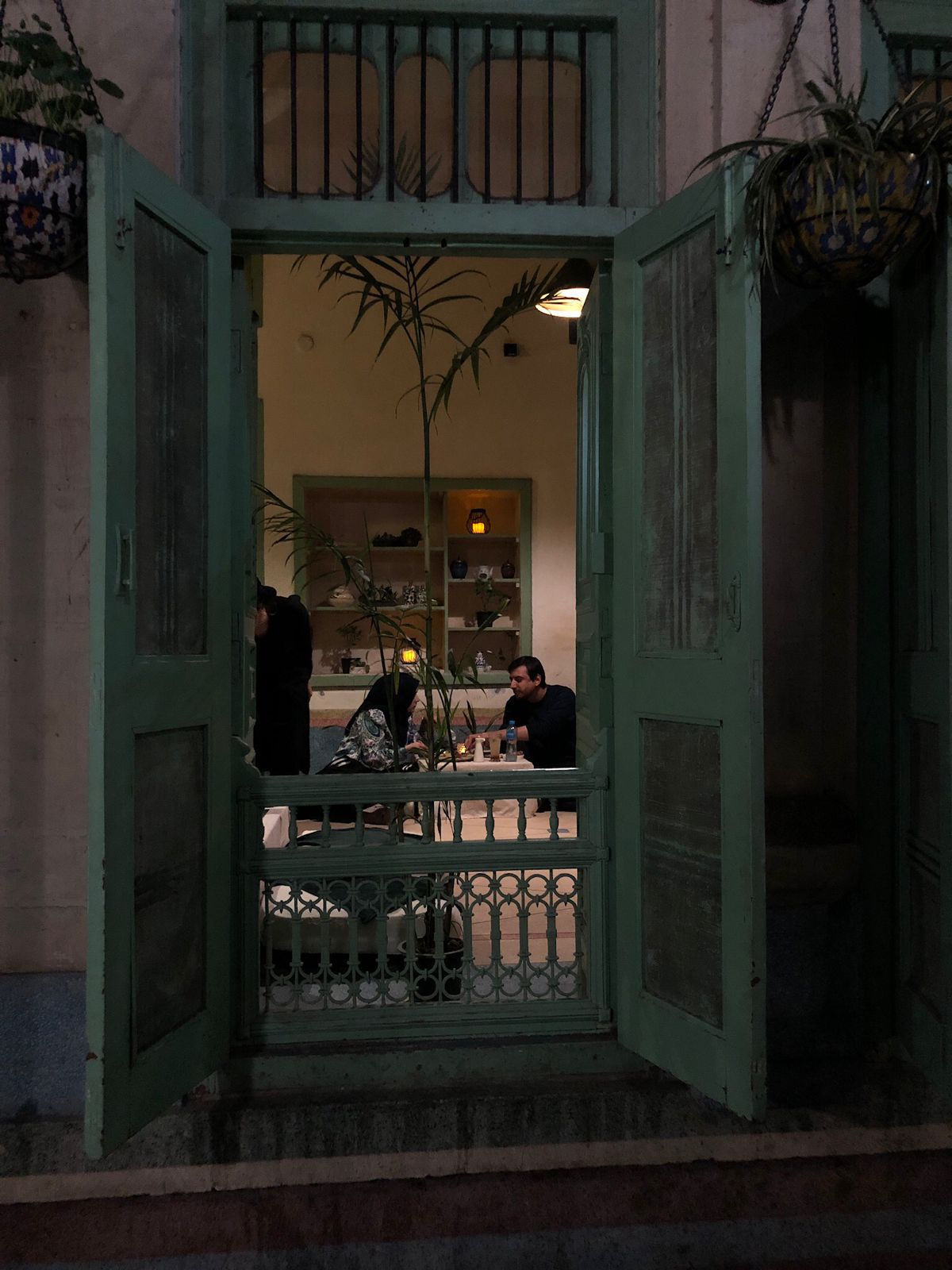
Spontaneity as Design: Jugaar and the City
Curated by Rashid Rana and Rohma Khan, Jugaar was a landmark project exploring South Asia’s culture of improvisation, resilience, and ingenuity. Rooted in Lahore’s historic Delhi Gate, the project unfolded as a living laboratory of ideas—where materiality, storytelling, and community intersected to redefine design.
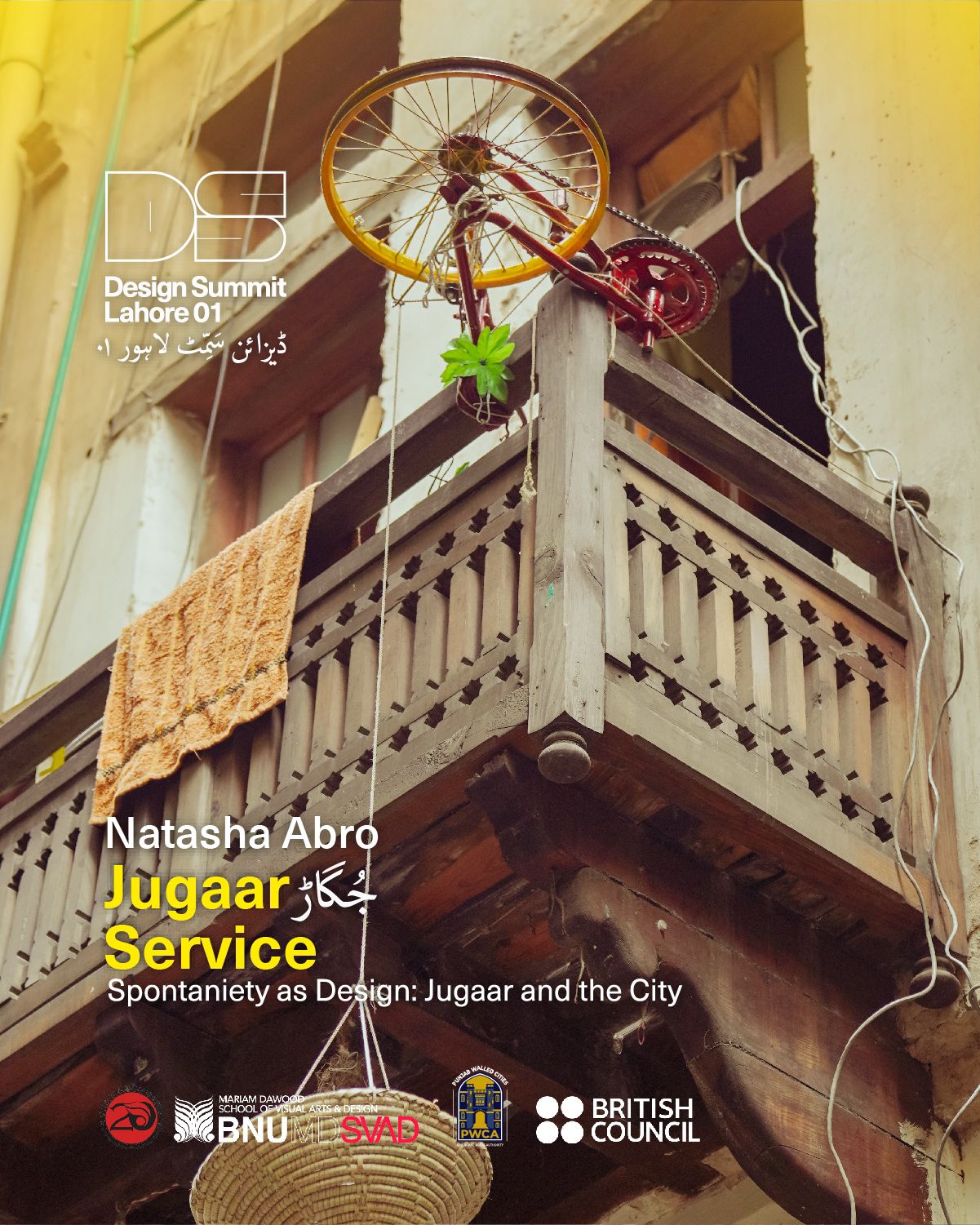
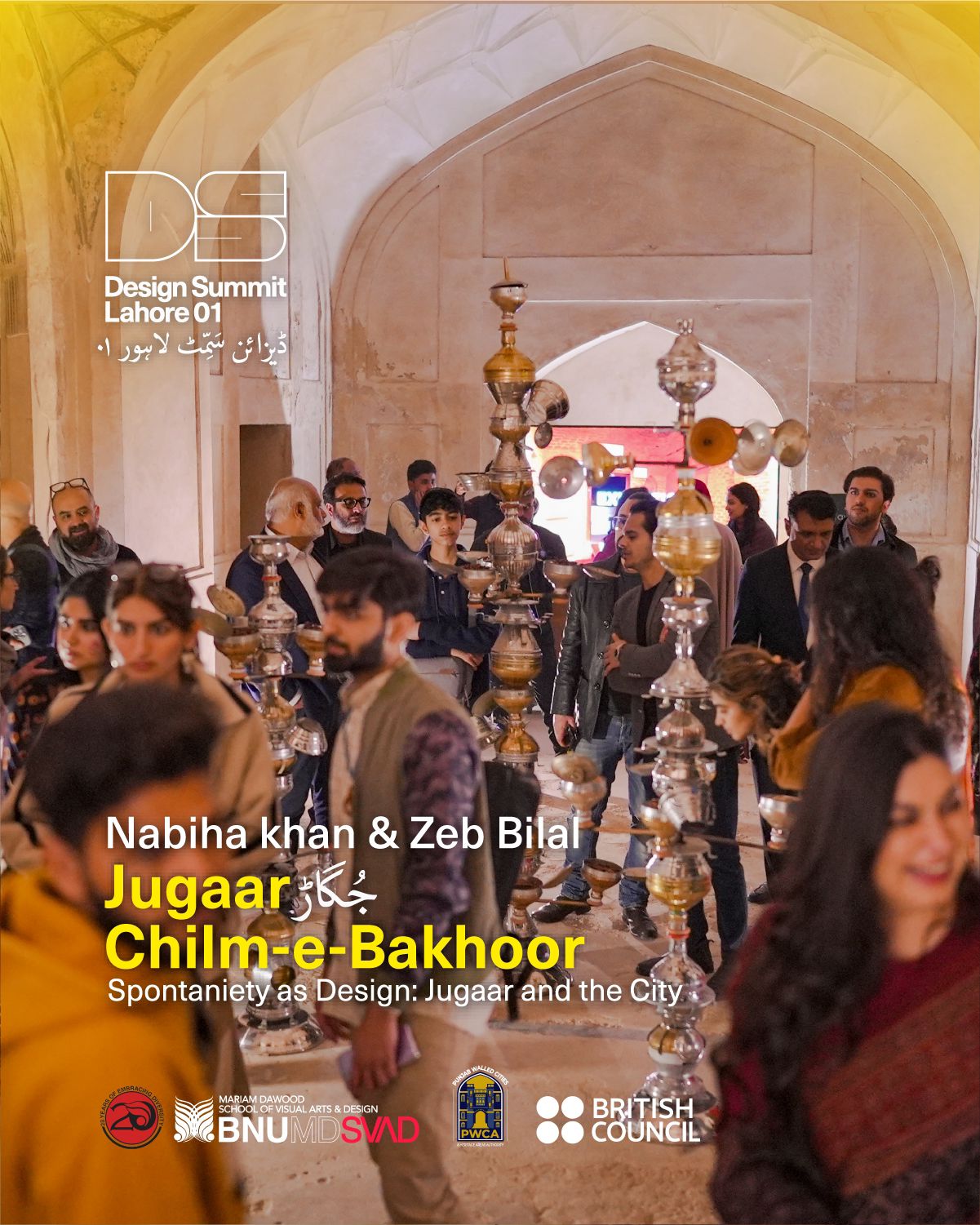
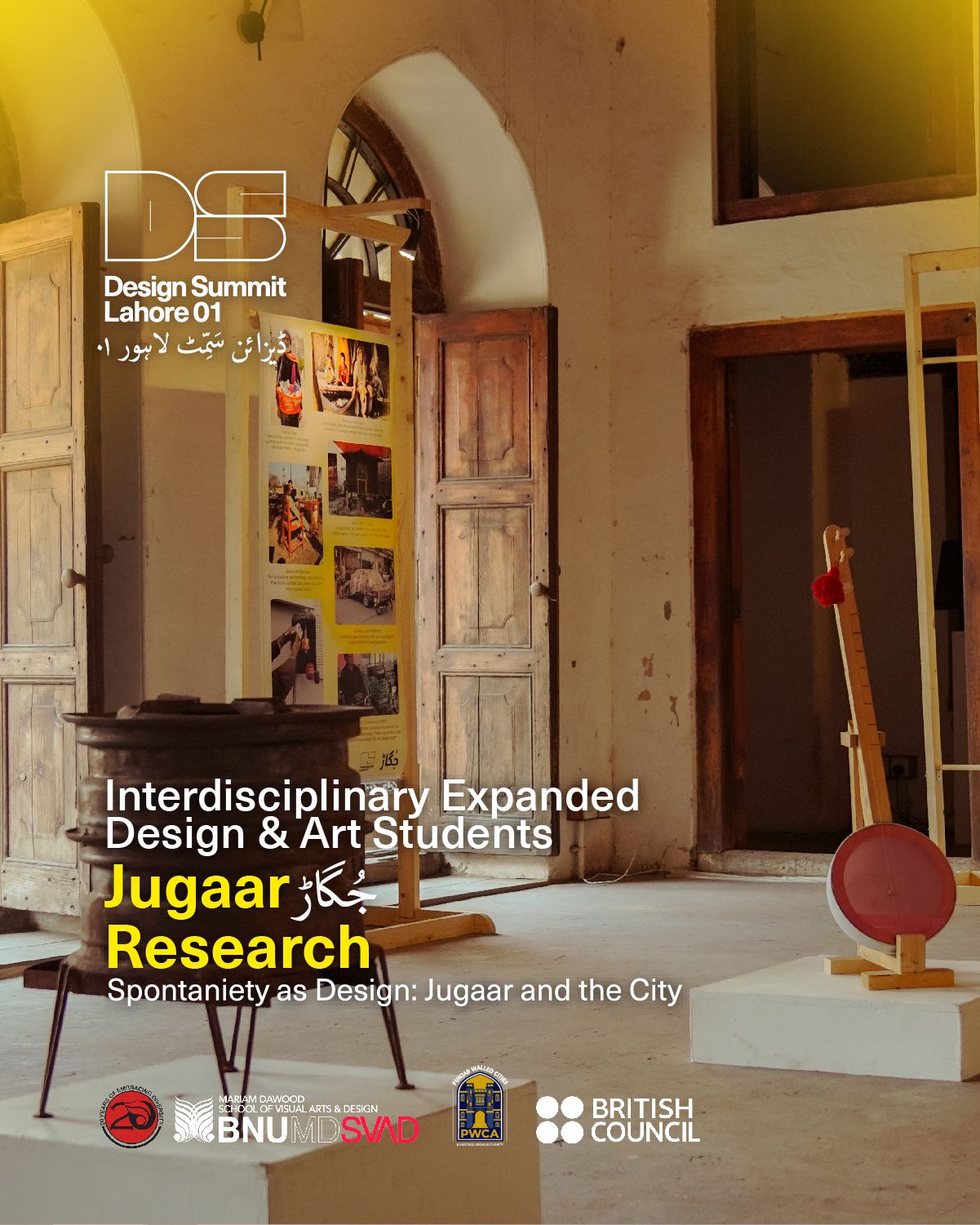
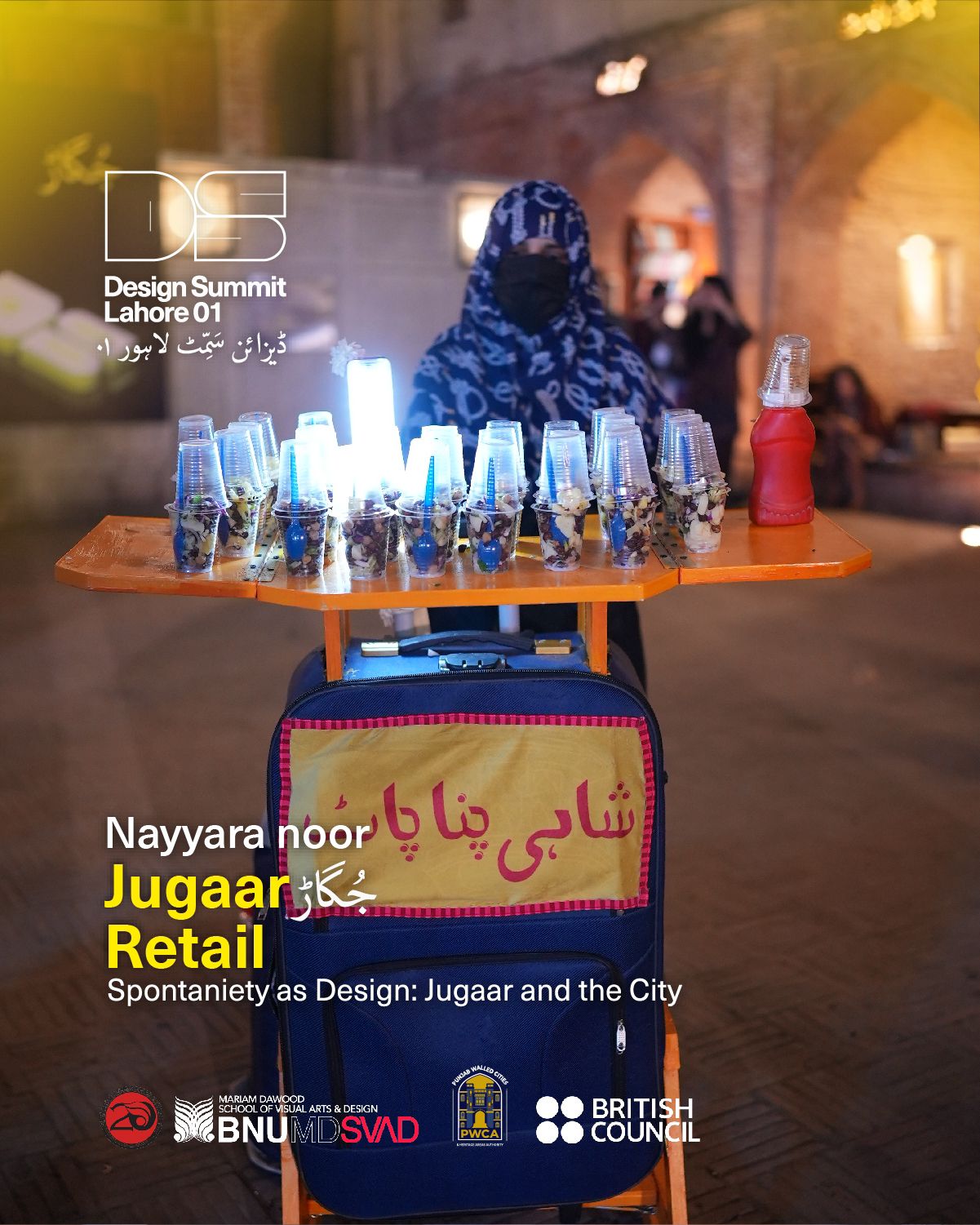
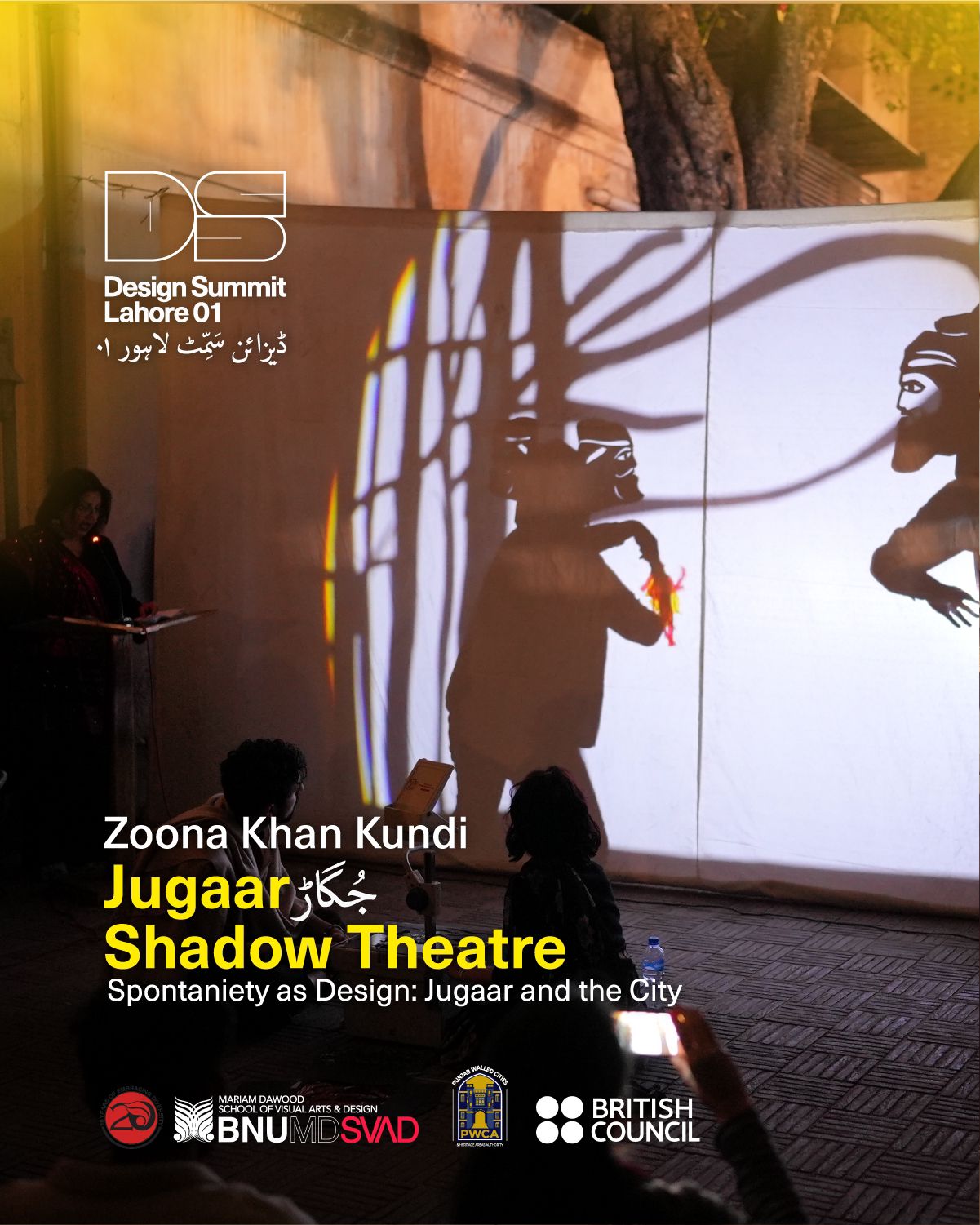
Over 20 projects by artists and students engaged with Jugaar not as a static framework but as an evolving philosophy embedded in urban life. The initiative featured workshops, installations, performances, and participatory interventions, drawing on lived practices of adaptation in South Asian cities. Collaborations with UK-based educators and support from the British Council enriched the project with global perspectives, bridging local ingenuity with international discourse.
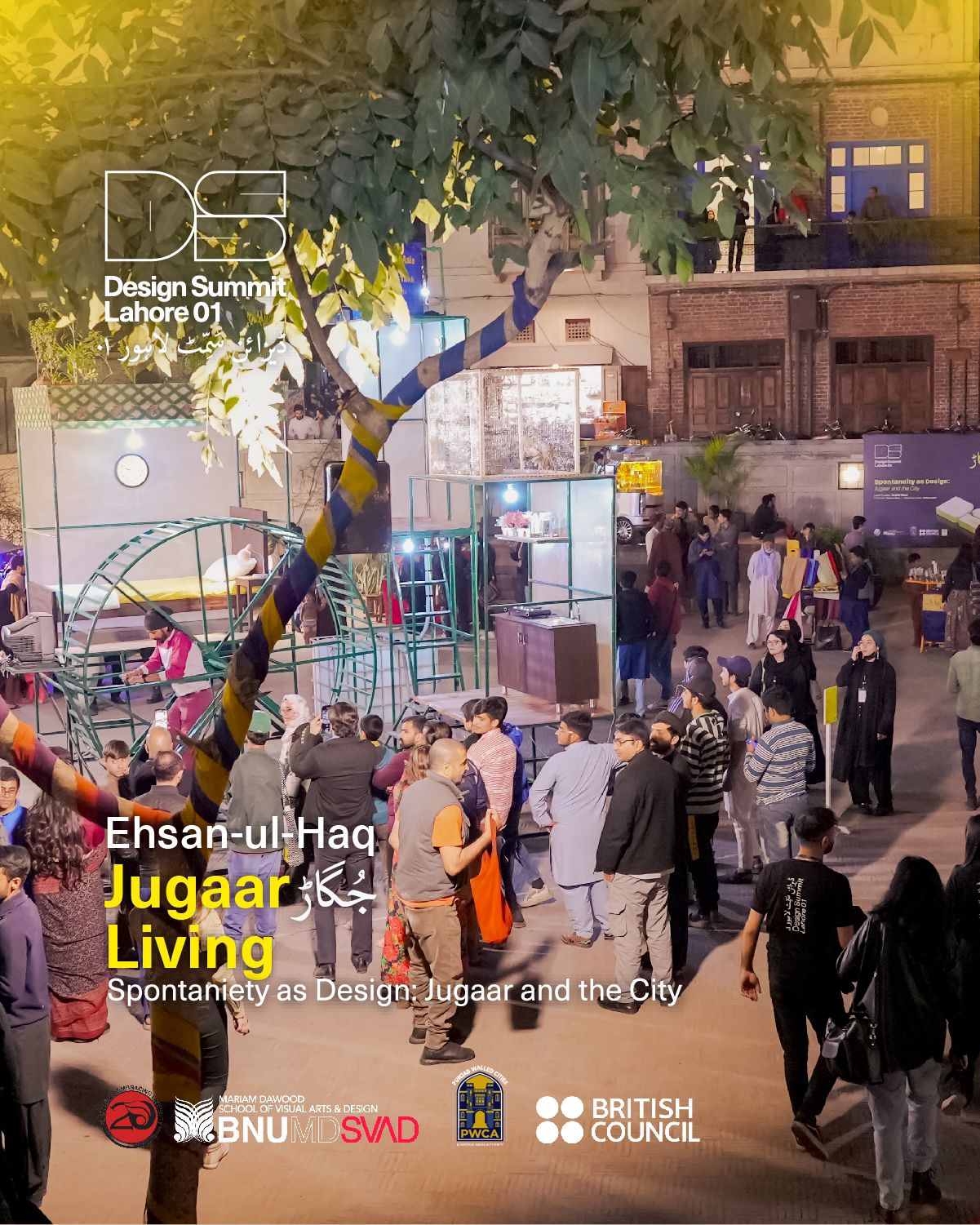
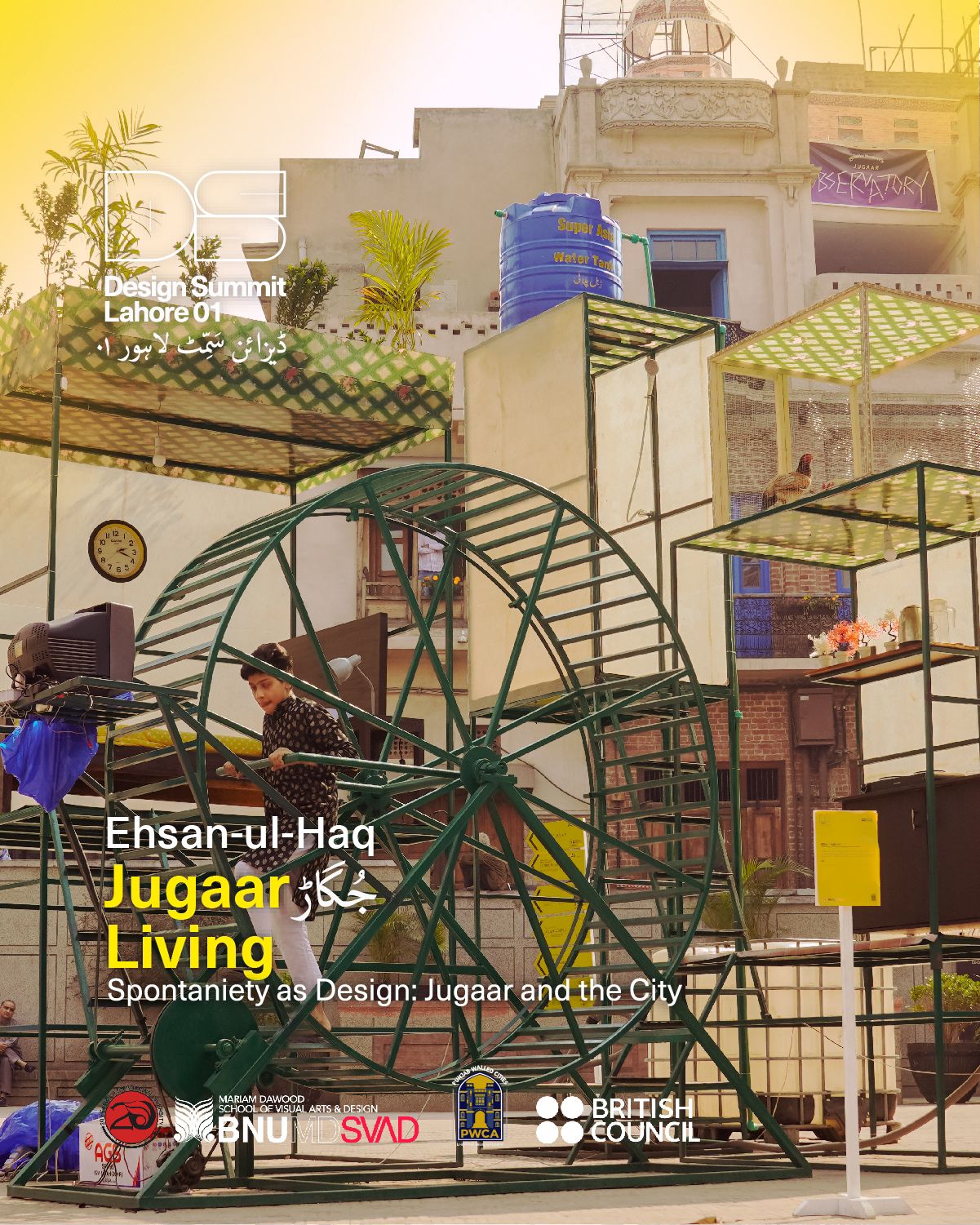
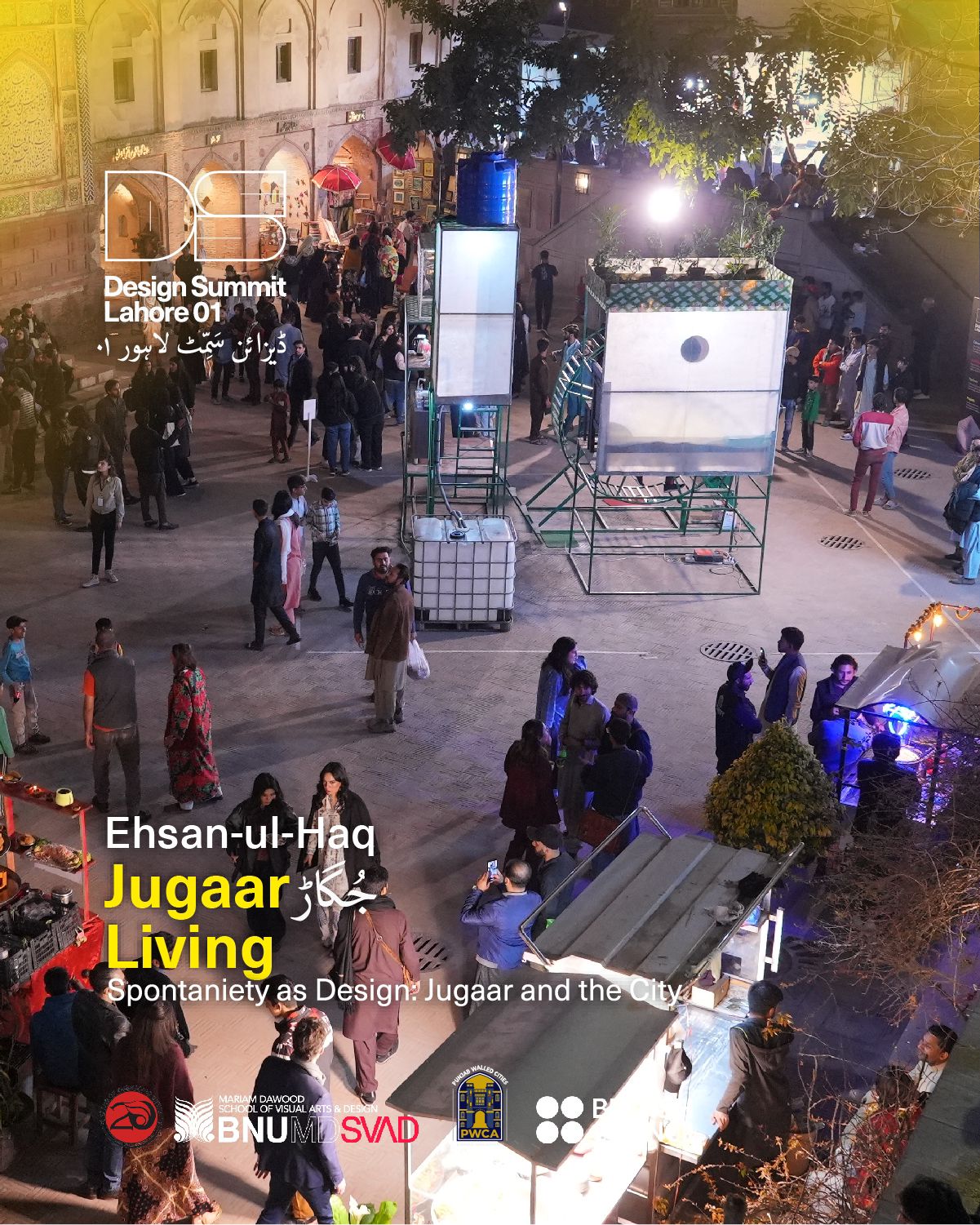
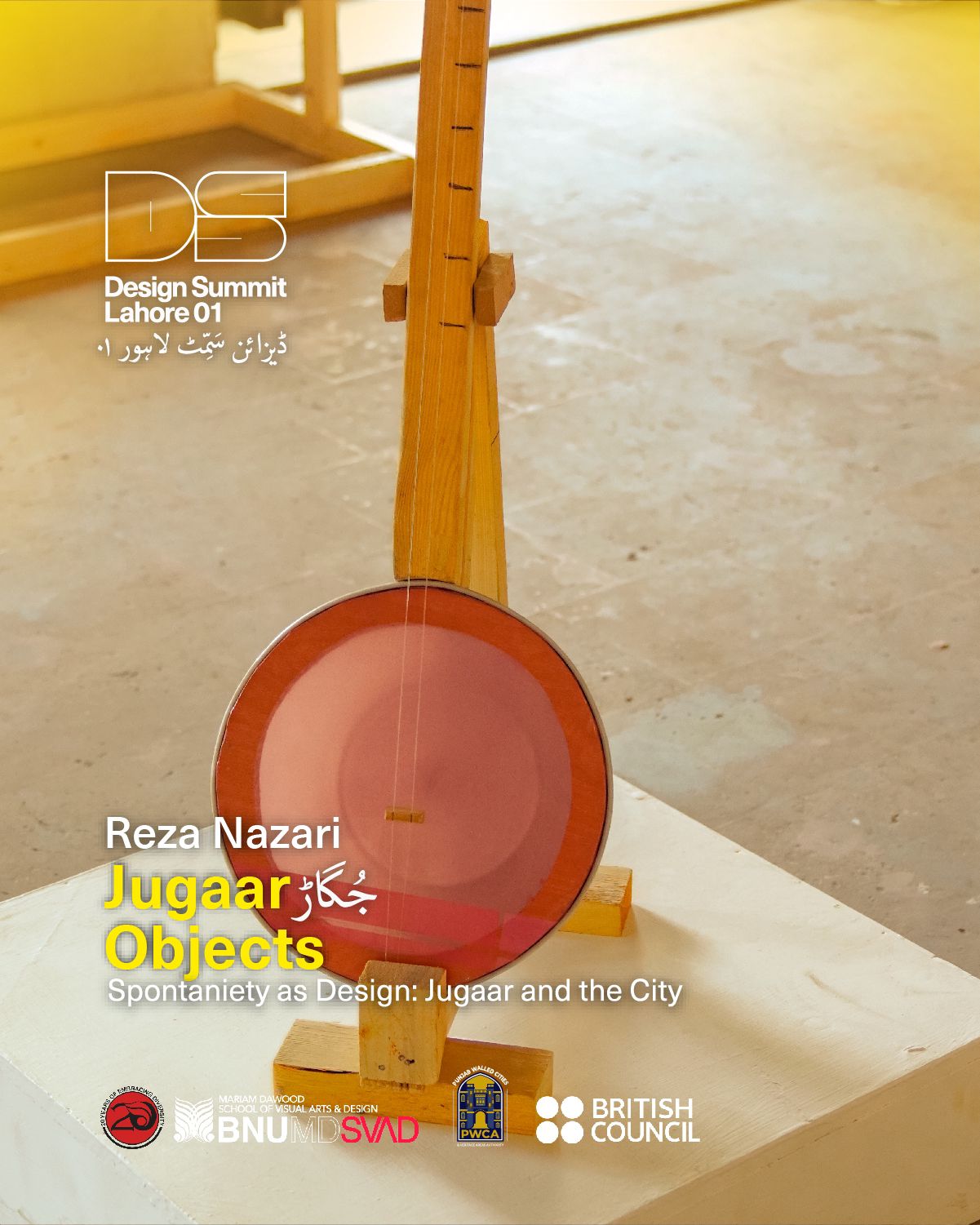
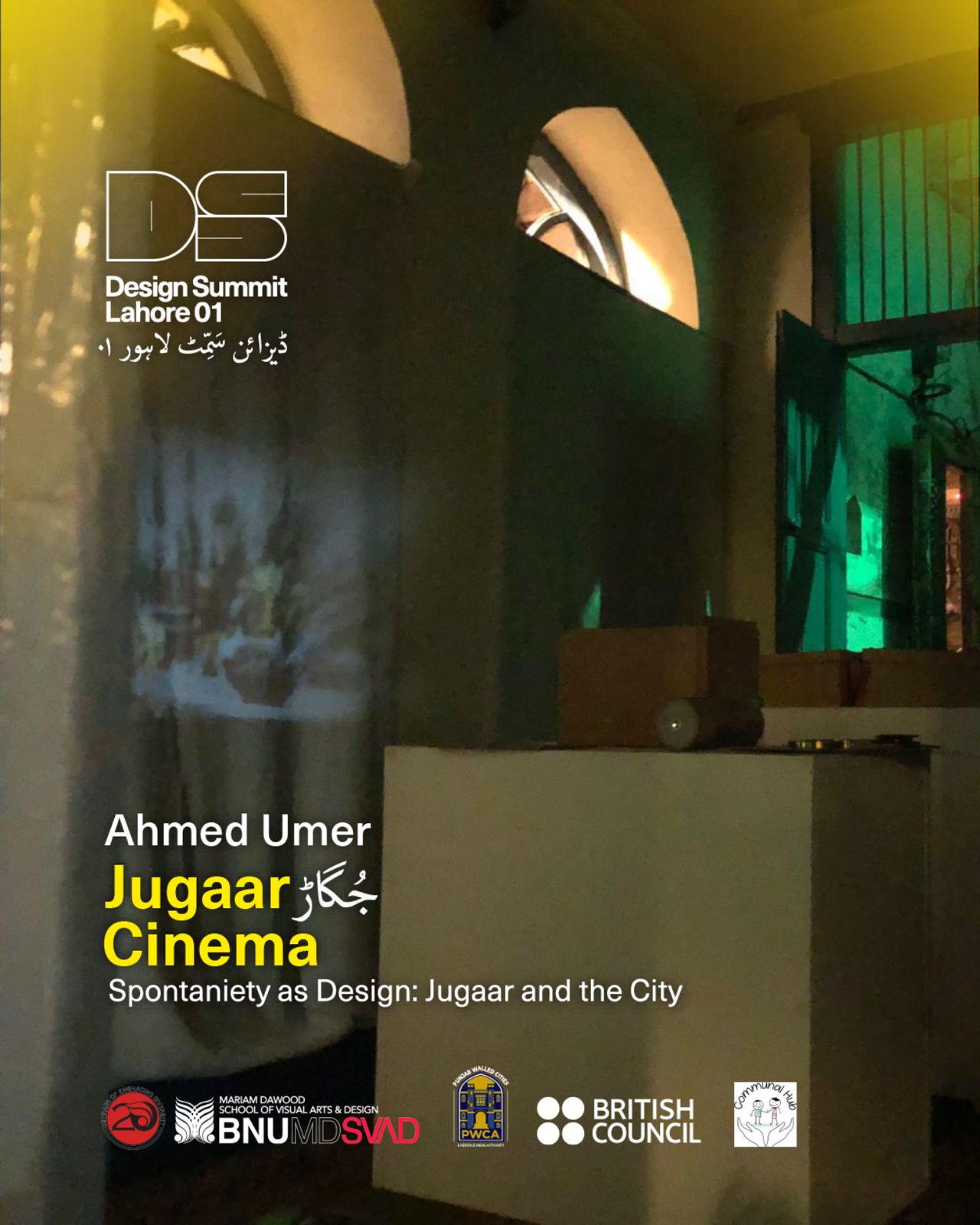
Highlights included Jugaar Living, a kinetic installation channeling energy and memory; Jugaar Observatory, transforming rooftops into reflective sites overlooking Wazir Khan Mosque; Jugaar Kahani, a storytelling intervention amplifying women’s resilience; and Jugaar Furniture, upcycling industrial waste into public seating. From football stitched with love to shoebox cinemas and swing installations, each work embodied Jugaar’s capacity to turn scarcity into creativity.
As co-curator, Rohma Khan shaped the project’s conceptual and community-driven approach, ensuring that Jugaar was experienced as both scholarship and lived practice. The project’s impact extended beyond the exhibition through the forthcoming IEDA Pad research journal, Spontaneity as Design: Jugaar and the City, which positions Jugaar within critical global art and design discourse.
Jugaar celebrated the adaptive spirit of South Asia, reframing informality not as deficiency, but as radical imagination and possibility.