Description:
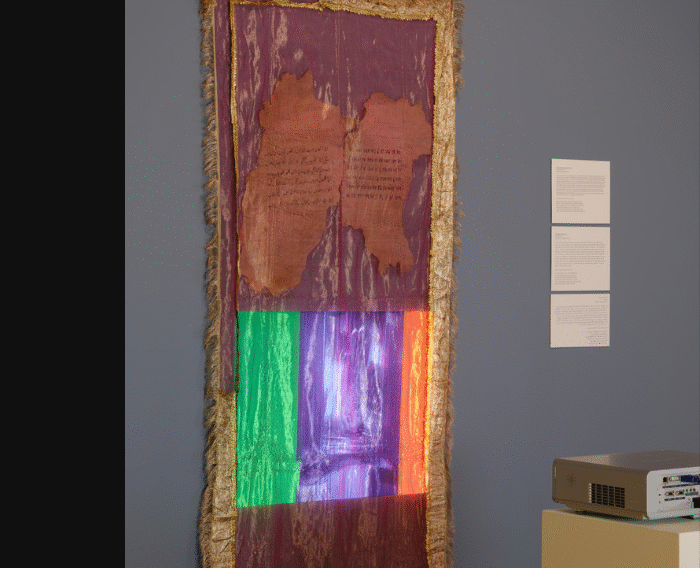
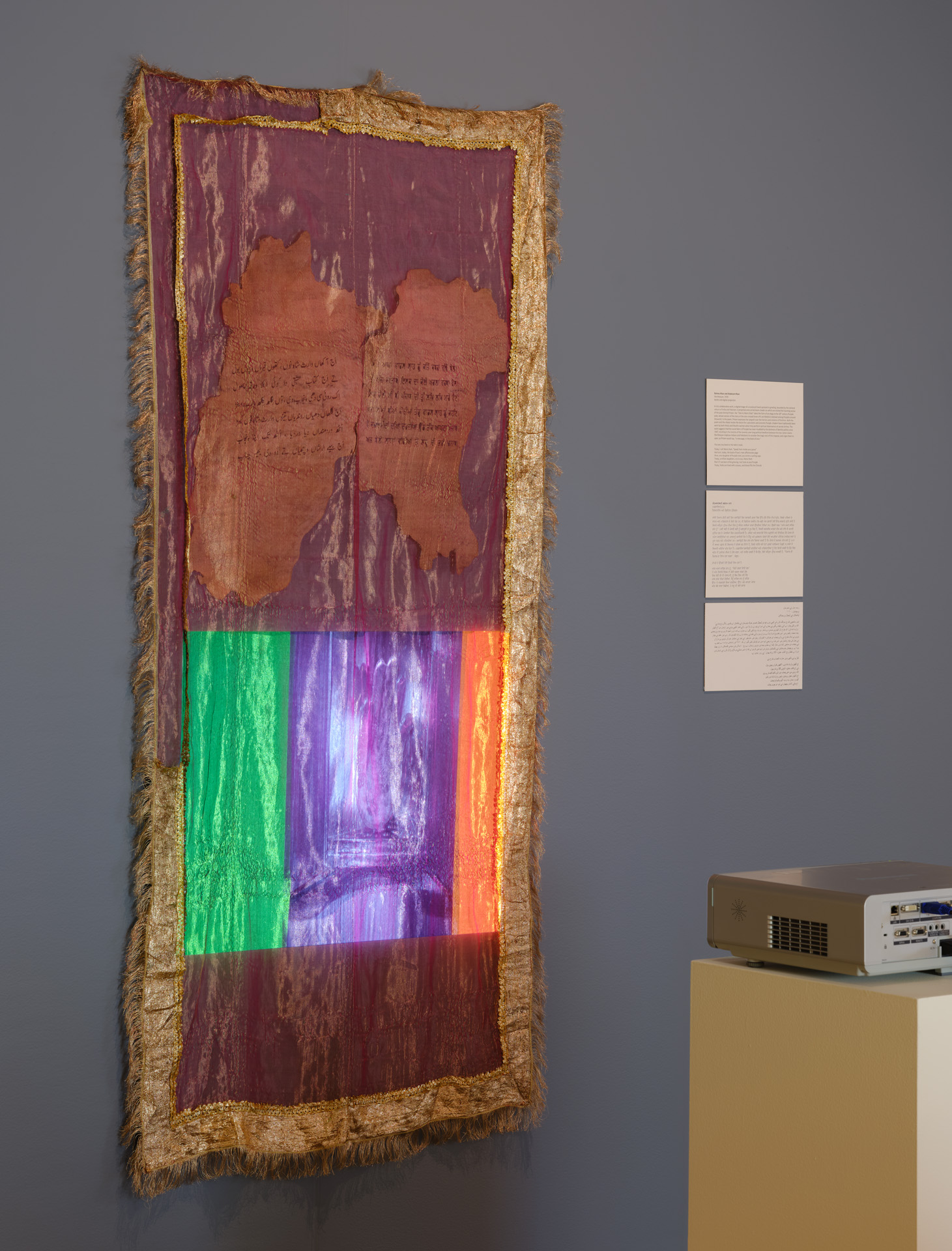
In this collaborative work, a digital image of a sculptural hand upraised in greeting, bounded by the national colours of India and Pakistan, is projected onto an heirloom chador on which are etched the haunting verses of the poet Amrita Pritam. Her “Ode to Waris Shah” takes the form of an elegy to the 18th century Punjabi poet, whose version of the story of the star-crossed lovers Hīr and Rāṅjhā is beloved among Punjabis around the world. In the poem, Pritam expresses her anguish over the horrors and violence of Partition. Both the poem and the chador evoke the desire for a pluralistic and syncretic Punjab: chadors have traditionally been worn by both Hindu and Muslim women when they perform spiritual observances at sacred shrines. The work suggests that the social fabric of Punjab has been muddled by the darkness of identity politics since 1947, resulting in the toxicity of the seventy-year long political deadlock between the two nation-states. Parchhaiyan implores Indians and Pakistanis to consider the tragic cost of this impasse, and urges them to open, as Pritam would say, “a new page, in the book of love.”
The text inscribed on the fabric reads:
Today, I call Waris Shah, “Speak from inside your grave”
And turn, today, the book of love’s next affectionate page
Once, one daughter of Punjab cried; you wrote a wailing saga
Today, a million daughters, cry to you, Waris Shah
Rise! O’ narrator of the grieving; rise! look at your Punjab
Today, fields are lined with corpses, and blood fills the Chenab